

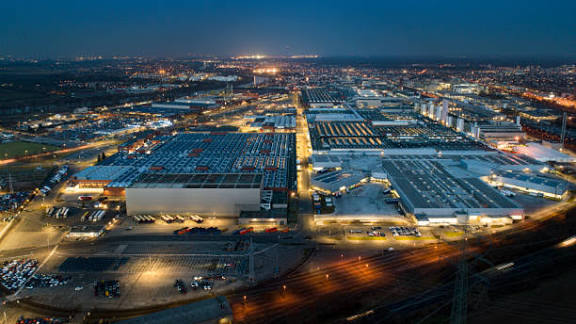
Africa’s experience with Special Economic Zones suggests that industrial transformation depends less on what happens inside the zone and more on the systems that connect it to the wider economy.
The Limits of the Enclave Model
Special Economic Zones have become one of the defining instruments of industrial policy across Africa.
The premise is simple. Concentrate infrastructure, incentives, investment and regulatory support within a defined geography and industrial activity should follow.
To a large extent, this has worked.
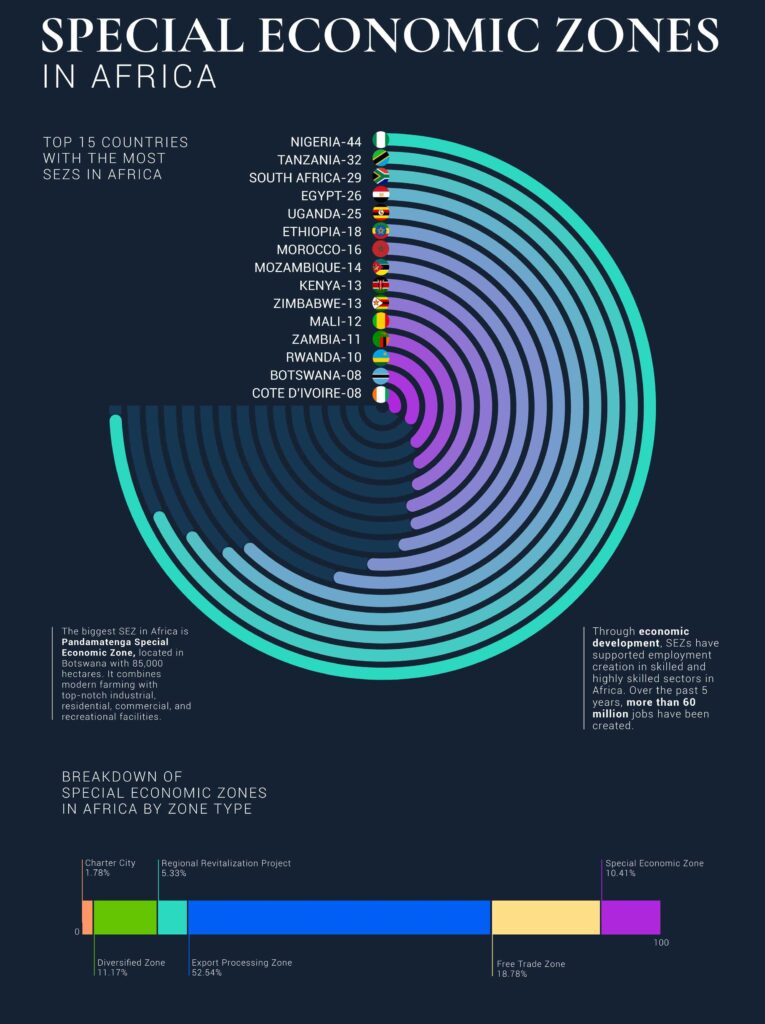
A recent study by Agence Française de Développement (AFD), examining more than 230 Special Economic Zones across 43 African countries, found evidence of positive impacts on investment attraction, export growth, employment and local welfare outcomes. In several cases, households located near SEZs experienced improvements in wealth, housing quality, access to utilities and educational attainment.
Yet the findings point to a more important question.
Can industrialisation be contained within a fence?
Success Inside the Zone Is Not the Same as Transformation Beyond It
The strongest-performing zones have undoubtedly created economic activity.
What is less clear is whether they have consistently transformed the productive structure of the economies around them.
Export diversification remains uneven. Integration with domestic suppliers varies significantly. Participation in regional and global value chains remains concentrated in a relatively small number of locations.
This distinction matters.
Generating activity inside a zone is not the same as strengthening an industrial ecosystem.
One creates output.
The other creates resilience.
The System Beyond the Fence
The evidence suggests that successful zones share a number of common characteristics.
Reliable infrastructure.
Effective governance.
Clear industrial strategy.
Logistics connectivity.
Institutional coordination.
Strong links to wider markets.
In other words, their success depends less on the incentives inside the fence than on the systems beyond it.
The roads that connect them.
The power that supplies them.
The suppliers that serve them.
The institutions that govern them.
The markets that absorb their output.
When those systems are weak, the zone can become an economic island. It may generate exports and employment, but its capacity to catalyse broader industrial transformation remains limited.
By contrast, where those systems function effectively, the zone becomes a node within a larger industrial network.
That distinction is critical.
A Familiar Development Challenge
This conclusion echoes a broader theme emerging across discussions on critical minerals, infrastructure development, industrial policy and investment risk.
The challenge is rarely the absence of opportunity.
More often, the challenge is whether surrounding systems are capable of sustaining reliability long enough for value to compound.
A mineral deposit is not a value chain.
A logistics corridor is not trade.
A power plant is not industrialisation.
And a Special Economic Zone is not an economy.
Each is a component within a larger system whose effectiveness depends on the strength of the connections between them.
Development outcomes are rarely determined by individual assets alone.
They are determined by the quality of the systems that allow those assets to reinforce one another.
From Investment Platforms to Industrial Ecosystems
Perhaps this is the deeper lesson emerging from Africa’s experience with SEZs.
The question is no longer whether more zones should be built.
The more important question is whether zones can evolve from isolated investment platforms into connected industrial ecosystems.
Ecosystems capable of strengthening domestic industry.
Supporting regional value chains.
Improving industrial competitiveness.
And compounding economic value beyond their boundaries.
Because ultimately, the measure of success is not what happens inside the zone.
It is what happens beyond its gates.
Sources
Agence Française de Développement (AFD), Special Economic Zones and Industrialisation in Africa. Available at: https://www.afd.fr/sites/default/files/2025-07/pr354_web.pdf
The views expressed in this brief are those of the author and are intended to stimulate discussion on industrial strategy, infrastructure and economic development.